
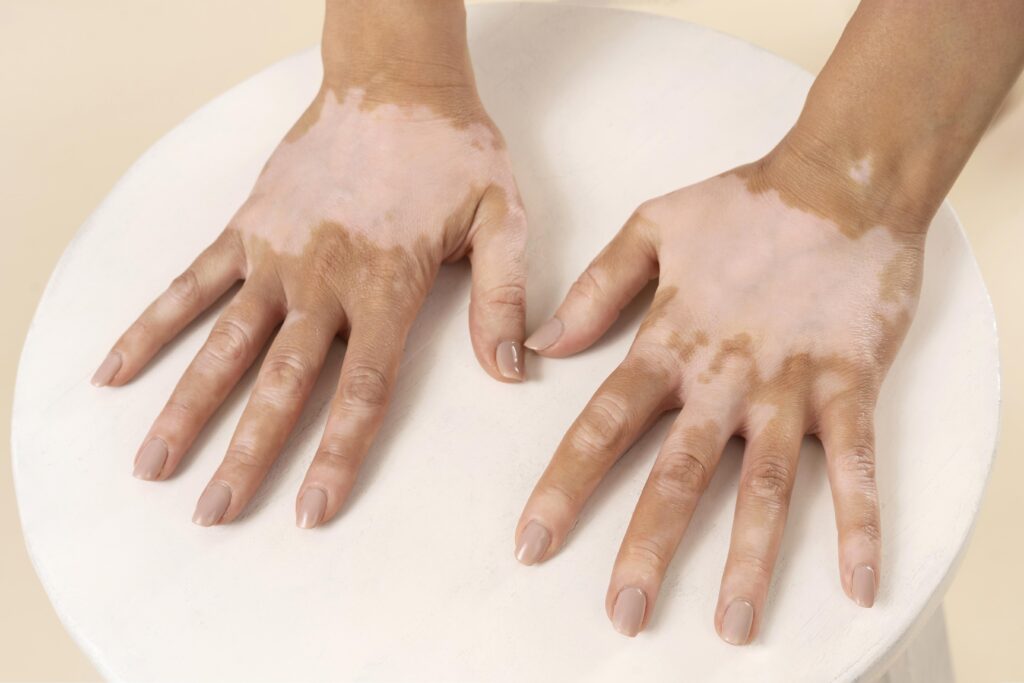
What is Vitiligo?
Vitiligo is a skin condition that causes patches of skin to lose their color. These patches can appear anywhere on the body. Often, the change in skin color is more noticeable on people with darker skin. Vitiligo happens when the cells that make skin color, called melanocytes, stop working or die. As a result, the skin loses its pigment and turns white. Although Vitiligo is not contagious or life-threatening, it can affect a person’s confidence and self-esteem.
Common Symptoms of Vitiligo
Vitiligo symptoms can vary from person to person. However, some signs are more common. Early detection can help manage the condition better. Here are the main symptoms:
Sometimes, Vitiligo symptoms can appear suddenly. But in many cases, they develop slowly over months or years.
Causes and Risk Factors
Doctors do not know the exact cause of Vitiligo. However, several factors may play a role. For example, Vitiligo is thought to be an autoimmune condition. This means the body’s immune system attacks its own cells. In this case, it targets the pigment cells. Other possible causes include:
Although anyone can get Vitiligo, it often starts before age 30. Both men and women are equally affected.
How Vitiligo is Diagnosed
If you notice white patches on your skin, it is important to see a dermatologist. Early diagnosis can help with Vitiligo treatment options. The doctor will usually:
Because Vitiligo can look like other skin problems, a proper diagnosis is important. For more details, you can visit trusted sources like the CDC or WHO.
Treatment Options for Vitiligo
While there is no cure for Vitiligo, several treatment options can help restore skin color or slow the spread. The choice depends on your age, the size and location of patches, and your preferences. Common Vitiligo treatment options include:
Sometimes, combining treatments works best. However, results can take time. For Vitiligo treatment in your area, consult a local dermatologist.
Lifestyle Tips and Self-Care
Living with Vitiligo can be challenging. However, some lifestyle tips can help you care for your skin and boost your confidence:
Additionally, talking to friends and family about Vitiligo can help reduce stress and stigma.
Prevention and Myths
Currently, there is no known way to prevent Vitiligo. However, some myths about Vitiligo are common. For example, some people think Vitiligo is contagious, but this is not true. Others believe it is caused by eating certain foods, but there is no scientific proof. Understanding the facts can help reduce fear and misunderstanding.
When to See a Dermatologist
If you notice new or growing white patches on your skin, it is important to see a dermatologist. Early treatment can help slow the spread and improve results. Also, if you feel sad or anxious about your skin, talking to a doctor or counselor can help.
In summary, Vitiligo is a treatable condition. With the right care and support, you can manage symptoms and live confidently. For personalized advice, consult your dermatologist today.
