
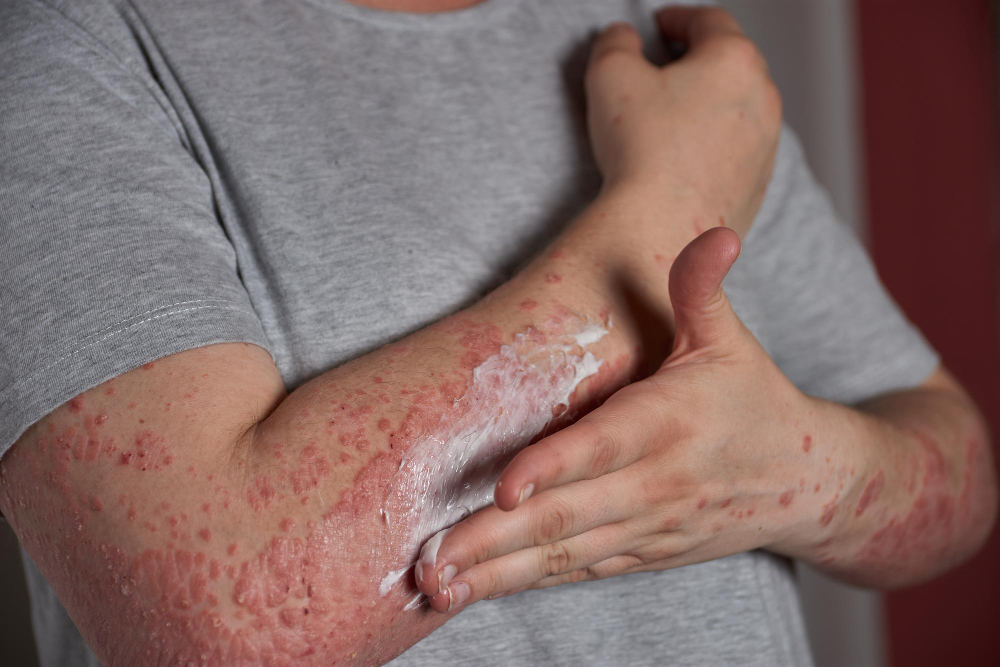
What is Psoriasis?
Psoriasis is a long-term skin condition. It causes red, scaly patches to appear on the skin. These patches can be itchy and sometimes painful. Although psoriasis is not contagious, it can affect your quality of life. According to the World Health Organization (WHO), millions of people worldwide live with psoriasis. Because it is a chronic condition, managing psoriasis at home and with medical help is important.
Common Symptoms of Psoriasis
Psoriasis symptoms can vary from person to person. However, some signs are more common. Early recognition helps in seeking timely care. Here are the main symptoms:
Sometimes, symptoms can flare up and then improve. But, for many, they come and go throughout life.
Causes and Risk Factors
Psoriasis happens when the immune system attacks healthy skin cells by mistake. This causes skin cells to grow too quickly. As a result, thick patches form. While the exact cause is not fully known, several risk factors increase your chances:
Even though anyone can get psoriasis, these factors make it more likely.
How Psoriasis is Diagnosed
Doctors usually diagnose psoriasis by looking at your skin. In most cases, a physical exam is enough. Sometimes, a small skin sample (biopsy) is taken. This helps rule out other skin problems. If you notice any new or changing skin patches, it is wise to see a dermatologist. Early diagnosis can lead to better management.
Treatment Options for Psoriasis
There are many psoriasis treatment options. The right choice depends on how severe your symptoms are. Here are some common treatments:
Because each person is different, your doctor will help find the best plan for you. According to the Centers for Disease Control and Prevention (CDC), following your treatment plan can reduce flare-ups.
Lifestyle Tips and Home Care
Managing psoriasis at home can make a big difference. While medical treatment is important, daily habits also help. Try these tips:
Additionally, avoid triggers like smoking and heavy drinking. These steps can help keep symptoms under control.
Preventing Psoriasis Flare-Ups
Although you cannot cure psoriasis, you can lower the chance of flare-ups. Here are some ways to help prevent them:
Because flare-ups can happen at any time, being prepared is key.
When to See a Dermatologist
If you notice new or worsening symptoms, it is important to seek help. You should see a dermatologist if:
Early treatment can prevent complications and improve your quality of life.
Consult a dermatologist for personalized advice and treatment options for psoriasis.
